
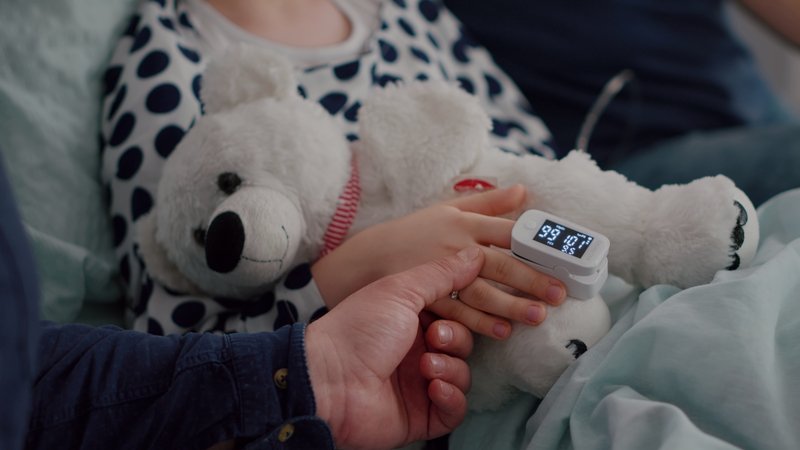
Call your pediatrician for a fever if your child is younger than 3 months with a rectal temperature of 100.4 F or higher, if a fever is high or lasts more than a day in young children or more than three days in older children, or if your child has concerning symptoms like trouble breathing, stiff neck, repeated vomiting, unusual sleepiness, or signs of dehydration.
At Just 4 Kids Urgent Care, we know childhood fevers can be stressful. A fever is a normal part of how the body fights infection, but certain temperatures and symptoms signal when medical attention is needed. Below are five clear temperature rules every parent should know to protect their child’s health and get expert guidance at the right time.
Understanding Fever And Your Child’s Temperature
A fever means your child’s body temperature is higher than normal body temperature, which is around 97 F to 100 F, depending on the child and the method used. Most fevers are caused by viral infections and are a good sign that the immune system is doing its job to fight illness. Childhood fevers are often safely managed at home, but some situations require medical care.
Use a digital thermometer for accuracy. For infants, a rectal temperature is the most reliable. For older children, an oral temperature is usually appropriate.
5 Temperature Rules Parents Need To Know
1. Any Fever In A Baby Under 3 Months Needs A Call
Rectal temperature of 100.4 F or higher
Babies this young have an immature immune system
Early signs of serious illness can be subtle
Call your child’s doctor right away for immediate medical attention.
2. High Fever At Any Age Should Not Be Ignored
A high fever is generally 104 F or higher
A higher temperature does not always mean a more serious infection, but it needs evaluation
Seek medical attention, especially if your child acts sick, has severe pain, or looks very uncomfortable.
3. Fever That Lasts Too Long Needs Evaluation
Under age 2: fever persists for more than a day
Older children: fever lasts more than three days or fever continues to return
Persistent fever may point to a bacterial infection, strep throat, or another condition that needs pediatric care.
4. Fever With Concerning Symptoms Requires Prompt Care
Call your child’s pediatrician or seek emergency care if a child has a fever along with:
Trouble breathing or labored breathing
Difficulty breathing or bluish lips
Stiff neck or severe headache
Persistent vomiting or repeated vomiting
Vomiting or diarrhea with signs of dehydration
Fewer wet diapers than usual
Dry lips or no tears when crying
Unusual sleepiness or confusion
Ear pain or a severe sore throat
Febrile seizures
Severe pain anywhere in the body
These symptoms can signal a serious illness that needs immediate medical attention.
5. Trust Your Instincts When Something Feels Off
Even if the temperature is not very high, call your child’s doctor if:
Your child looks very ill or acts sick
Your child has other symptoms that worry you
You are unsure about the correct dose of fever medicine
Your child has a weakened immune system or a chronic condition
Parents know their child best. Your concerns matter.
How To Safely Manage A Fever At Home

Most fevers caused by common illnesses can be safely managed while you monitor symptoms.
Helpful tips include:
Encourage rest to support the healing process
Drink plenty of fluids to prevent dehydration
Use fever-reducing medicine only if needed, and always use the correct dose
Dress your child in lightweight clothing
A lukewarm bath may help with comfort, but avoid cold baths or alcohol rubs
Never leave a child in an overheated car
Remember, fever itself does not cause brain damage. Fevers are a normal part of how the body fights infection.
When To Seek Emergency Care Immediately
Go to emergency care or call 911 if your child has:
Trouble breathing or severe labored breathing
A stiff neck with fever and severe headache
Seizures that do not stop
Signs of dehydration with lethargy
Fever after being in a hot environment, like an overheated car
These situations require urgent medical care.
Frequently Asked Questions About Fever In Children
What temperature counts as a fever?
A fever is generally a body temperature of 100.4 F or higher.
Is fever medicine always necessary?
No. Fever medicine is for comfort, not to cure the infection. If your child is playing, drinking, and comfortable, medicine may not be needed.
Can teething cause a high fever?
Teething may cause a child to feel warm, but it does not cause a true high fever.
Are fevers a bad sign?
Most fevers are a good sign that the immune system is working. The concern is not just the number, but your child’s symptoms and age.
How Just 4 Kids Can Help
At Just 4 Kids Urgent Care, our team provides trusted care for infants, children, adolescents, and young adults across Eastern Idaho. We guide parents on when a fever can be safely managed at home and when a child needs medical attention. If you notice concerning symptoms or are unsure about your child’s temperature, contact us today for expert guidance and personalized care.
Our pediatric offices are conveniently located to serve families throughout the region, including our Rexburg office, Pancheri office, and our Eagle Drive office in Idaho Falls.